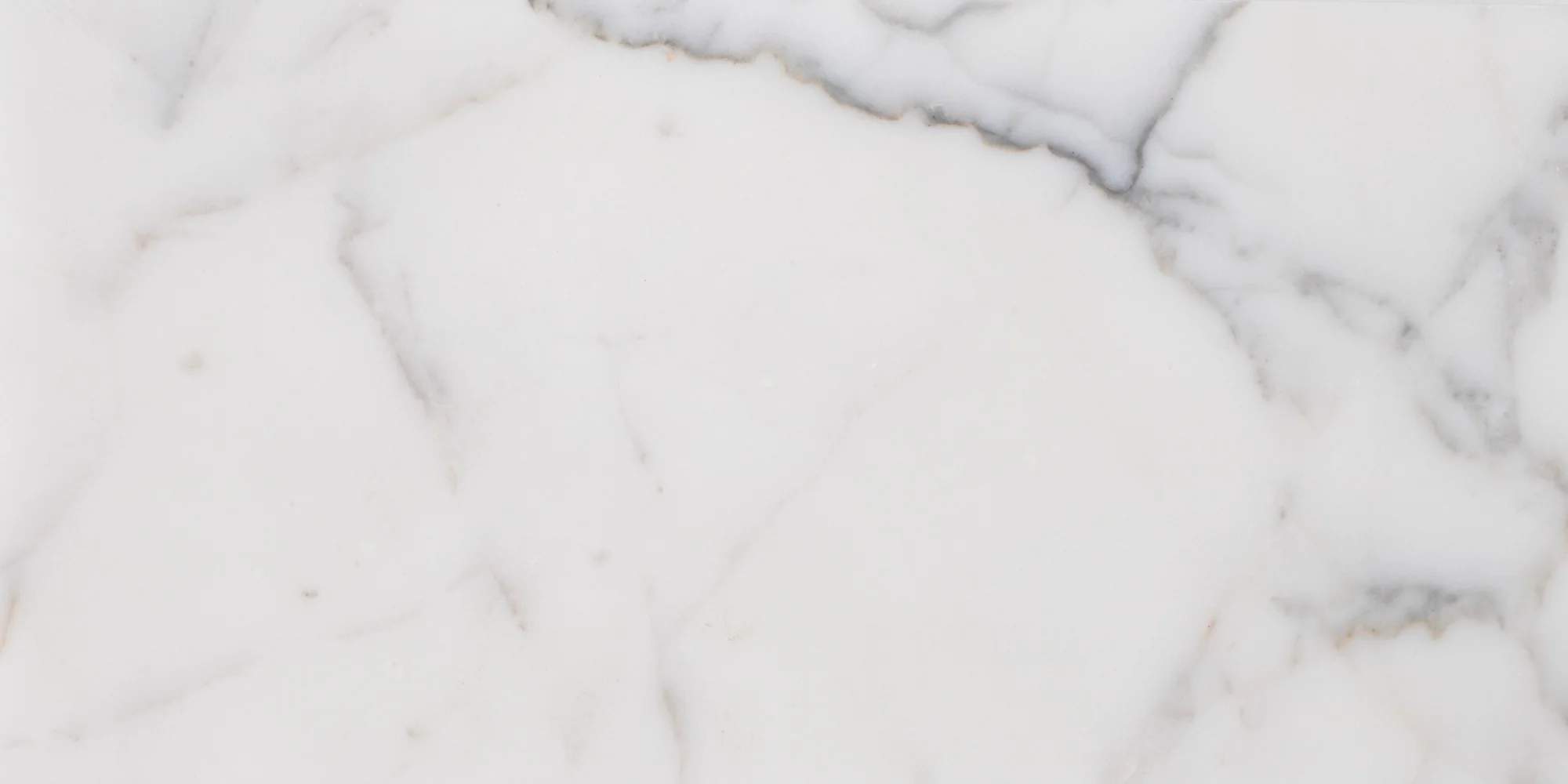
Statuario Winter Honed Marble 6"x12"
.webp)
.webp)
Statuario Winter
is one of the world’s most famous and historically important natural stones. Quarried from the Apuan Alps in northern Tuscany, it has been prized for over 2,000 years for its pure white appearance and fine grain.
Ancient Roman Origins
Statuario winter marble quarrying began during the time of the Roman Empire around the 1st century BCE. The Romans called the area “Luna” because nearby Luni served as the main port for shipping marble throughout the empire.
Roman builders used Statuario marble in:
- Temples
- Public baths
- Monuments
- Villas
- Sculptures
Famous Roman structures containing Statuario winter marble include parts of the Pantheon and Trajan's Column.
Renaissance Fame
Statuario Winter marble became even more celebrated during the Renaissance. Artists and architects valued it for its smooth texture and ability to hold fine detail.
The Renaissance artist Michelangelo personally visited the Statuario winter quarries to choose marble blocks for his masterpieces, including:
David
Pieta
Other Renaissance architects used Statuario winter marble in cathedrals, palaces, and churches across Europe.
Quarrying Methods
Early quarry workers used hand tools, wooden wedges, and manpower to separate blocks from the mountains. During the 19th century, quarrying became more industrialized with:
- Explosives
- Steam-powered machinery
- Rail systems
Today, modern quarries use diamond wire saws and heavy machinery to cut enormous marble blocks safely and efficiently.
Modern Importance
Statuario winter marble remains a symbol of luxury and craftsmanship. It is widely used for:
- Flooring
- Countertops
- Bathroom tile
- Sculptures
- Architectural design
The region around Statuario still produces millions of tons of marble each year and continues to supply stone for projects worldwide.


