Calacatta Violin Honed Marble Flute in 6" x 24"
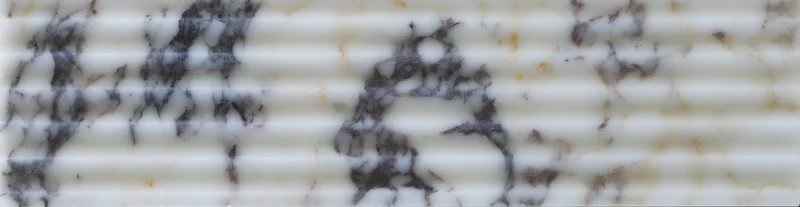
Calacatta Violin is one of the most distinctive and dramatic members of the Calacatta marble family, and its history is tied closely to the Italian Apuan Alps marble region.
Geological origin (millions of years ago)
Calacatta Violin formed through the metamorphosis of limestone under extreme heat and pressure in the Apuan Alps of Tuscany, Italy.
Its signature purple and burgundy veining comes from iron- and manganese-rich mineral deposits that entered fractures in the stone during formation, creating its dramatic “painted” appearance.
Quarry origin (Italy – Vagli area)
Unlike standard Carrara marble, Calacatta Violin is primarily extracted from the Vagli quarry area in the Apuan Alps (Lucca province), a geologically distinct zone within the broader Carrara marble region.
Part of the same mountain system as Carrara marble
Much rarer due to limited extraction zones
Quarries produce highly variable, selective blocks
This scarcity is one reason Viola is considered a premium stone.
Historical use (Roman → Renaissance era)
Like other Italian marbles from the region, Violin’s geological family has been used since:
Ancient Roman times for architecture and monuments
Renaissance era, when Tuscan marble became central to sculpture and high art
While “Calacatta Violin” as a named variety is modern, its material lineage belongs to centuries of Italian marble craftsmanship and quarrying tradition.
Modern naming and commercial identity
The term “Calacatta Violin” is not an ancient classification—it is a modern trade name used by quarries and stone suppliers to describe:
Calacatta-type marble (high-contrast white base)
With distinctive violet / burgundy veining
From specific Apuan Alps quarry zones
It is often considered a “designer selection” rather than a historically standardized stone type.
Rise in luxury design (2000s–today)
Calacatta Violin became globally popular in modern interior design due to:
Demand for statement marble with color
Shift away from plain white minimalism
Social media and luxury home design trends
Today it is widely used in:
Kitchen islands
Bathroom walls and vanities
Fireplace surrounds
High-end boutique hotels
Recent design trends highlight it as part of the “bold stone” movement replacing plain neutrals.
Why it’s considered special
Extremely rare slabs
Highly variable patterns (no two pieces alike)
Strong visual contrast (white + violet/burgundy)
Viewed as “art-like” stone rather than background material
Key takeaway
Calacatta Violin is a modernly named luxury marble from a specific part of the Italian Apuan Alps, rooted in ancient marble geology but elevated today as a designer “statement stone” because of its rarity and dramatic coloration.
If you want, I can compare it directly with Calacatta Moon or Calacatta Oro so you can see which works better for kitchens vs bathrooms.


